© Tallis Baker 2026
The opening few chapters of a WIP dark fantasy novel. Posted for feedback.
TW: trauma responses, grief, mention of genocide and persecution.
PROLOGUE: THE TITHE
Rika’s ma doesn’t like her dancing with the river spirits. It’s dangerous, she’ll say, too dangerous for people like them to dance where anyone might see. But Rika has never been good at following rules.
Even a child like her, a child like they make in Albor in these days: watchful, careful, too grown up for her years. She tries to follow the rules, she does: rules like not dancing, rules like not shouting in the streets, rules like not being outside and alone after dark. But she always seems to slip. Dancing with the spirits makes her feel like she’s talking to them, using the only language they share. She can’t compel them, the way she could a person, but she likes to commune.
And when the spirits dance only at night, well, that’s another rule she has to break.
This night, though, her ma isn’t here. Rika has come to the river and brought her offering—a hunk of raw meat, dripping onto the ground by her feet. She spent her entire allowance to beg it from the butcher.
There are some rules she knows to follow at all costs. Rules like avoiding the Murkers. Rules like keeping your head down around police. Rules like the world is different for people like us.
Her ma has taught her the rules for interacting with the spirits—rules of tithes and permissions—and Rika knows that to disobey these rules means death.
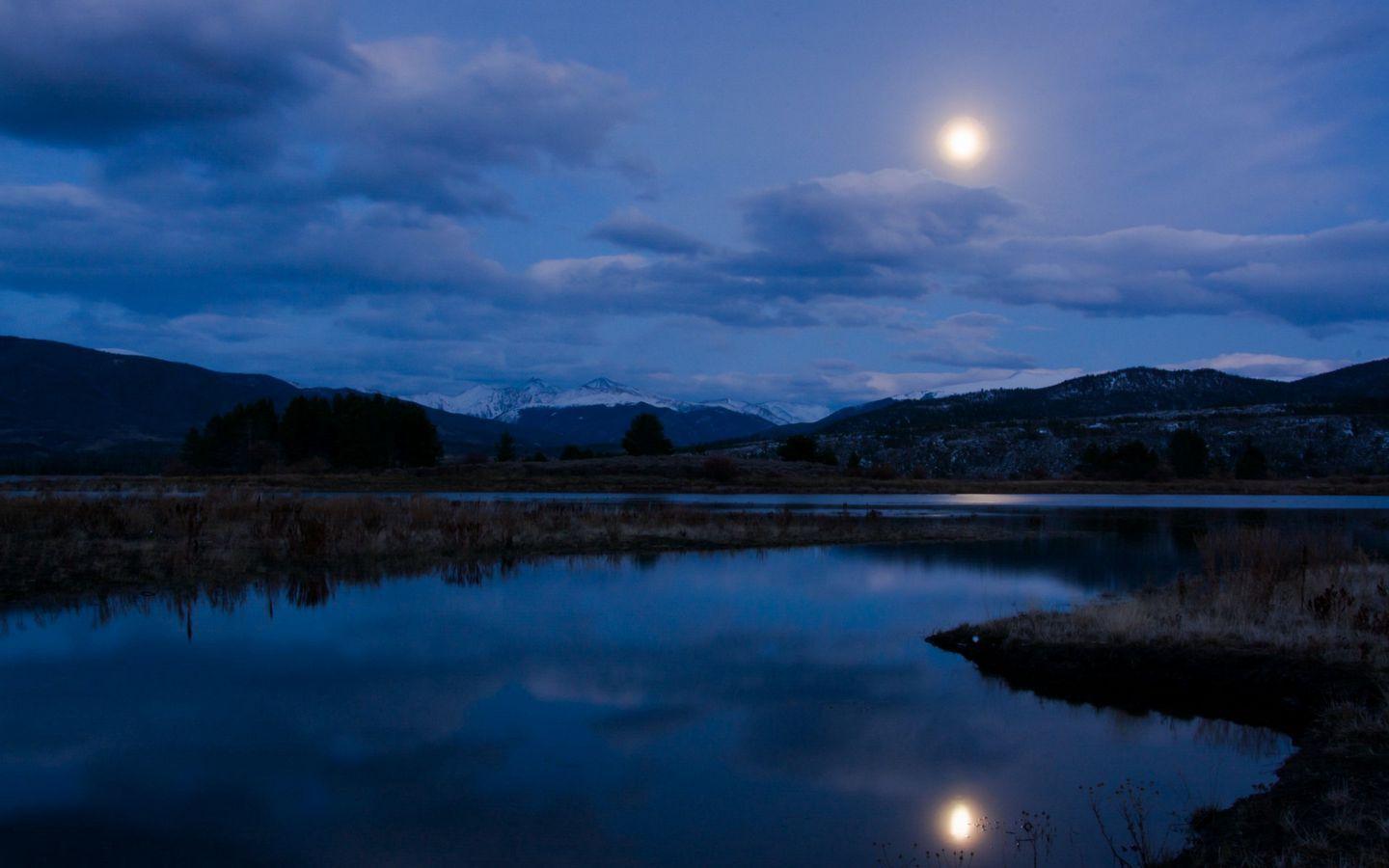
The river stretches in front of her, a sheet of black glass, catching the faintest glimmer from the slivered moon overhead. The tangled, unloved bracken crackles beneath her feet. Behind her, far behind her, smoky light spills out of the city. Here, the darkness and quiet are knife-edged. Mist billows on her breath, the cold sneaking long fingers under her collar.
“I bring a tithe.” Her voice wobbles, not from fear the spirits will appear but from fear they won’t. “Please, help my ma.”
She got sick two days ago. The blood plague, Rika knows, though her pa won’t let her or Noemi into their ma’s room. Everyone knows someone who has it: her dance teacher, the annoying boy from school, the local shop owner. It’s all around them, but Rika thought it wouldn’t touch her family. She is so young, all of seven, but she already sees how foolish she’s been.
Tomorrow, her world will change. Tomorrow, these rules she clings to with such faith will fail her. She knows none of that, standing desperate by the river, bloody meat clutched in her small hands and staining her fingers. She knows only that her ma is sick, very sick, and that no one survives the blood plague. She knows only that the spirits are miraculous, other-worldly beings, subjects of folktales and songs, and that if anything can cure her ma, surely they can.
There is something else that could—the Other, the beings that thrive on bargains—but not even young, desperate Rika will go to them. It is well-known that any bargain struck with the tricksy Faen will take its bloody due.
“Please,” she tries again. She holds out the offering. “I bring you meat. Will you help me?” She taps out a few steps, flicking her toes and cocking her wrist the way her dance teacher tells her—when performance becomes truth, when will is firm, when heartbeats align—putting her plea into the fragment of dance. Her heart isn’t in it. Dance should be joyous. She can’t dance while her ma is dying, but still, she tries. Please. Help me. The only language she and the spirits share.
The river holds its disinterested quiet.
“Help me!” She gives up, stomps her foot, and is instantly embarrassed. It’s a tantrum that belongs to another child, one who didn’t grow up in a world that hates her twice over: once for the colour of her skin and again for the magic in her veins. Rika isn’t that child.
Back at her house in the Che’hu district, she knows her pa sits outside the door to the bedroom, praying to the god from his homeland. He’s not a mesmerel—the plague won’t touch him. But he’s terrified of carrying it out of the sick room. Rika has heard him say as much to Unchi Cristofer. She imagines his clothes grabbing onto the tiny sprites that make sickness and dragging them off her ma. Perhaps her ma will get better, then.
She’s glimpsed her ma, once, when a Speaker of the old religion came, robed and masked, to bathe her in yarrow water. She hid in the room across the corridor, staring at this strange, forbidden remnant of her city’s past, and saw the bloody sores on her ma’s face, her neck, before the Speaker closed the door behind him. The image frightened her.
After that, when the Speaker left, Rika heard Unchi Cristofer tell her pa he would do what he could, but even Rika knows Cristofer has no power, for all that he belongs to another world. That, for all the time he spends in Inner Albor, speaking up against the physicians who refuse to treat the blood plague, nothing will change.
That’s another thing Rika isn’t supposed to know. No one is looking for a cure—that’s what they call it, looking for a cure, as though it might be found hidden at the back of a closet—for a plague that only targets people like her and Noemi and their ma. Because these people, the ones who might find this cure, don’t like people like them.
Why? Rika doesn’t know. It seems one of those truths of the world, accepted like the sun’s path from river to witchwood. It just is.
And this truth is the reason her ma is sick, and isn’t going to get better.
“Please,” Rika begs. “Please.”
But the spirits never come. Perhaps they know already what is to happen, the horrors the morning will bring. The tragedy of peaceful blood, spilled in hate. Or perhaps they simply know another truth: that they can do nothing to save a life. Rika will wonder, later, why she’d thought they had any power.
It is the fantasy of a child who worships the spirits, whose childhood balances on tales fair and Fell of the creatures that dwell in the world beyond Albor. It is the delusion of a girl who dances by the river’s edge in the weak sight of the slivered moon, and asks the spirits to dance with her.
In the end she hurls the meat into the water, losing it to the darkness, hearing the lonely splash.
“Have your tithe,” she spits, and turns away, towards home. Towards the silent fracturing of a family already grieving.
When the winter sun rises, the mesmerels and their allies will march through the city.
Most will never see sundown.
CHAPTER 1
These days, Rika Funar lived for two things.
She lived for dance, when the music caught her body and swept her up in its embrace. She lived for the attention and the applause, knowing everyone watched her but nobody saw her, walking that dangerous line between an innocent dancer and a mesmerel. Aware, every moment, that they’d haul her away if they knew what she was. A mesmerel, doing that forbidden thing: using her art.
The other thing she lived for was revenge.
She threaded through the fish market, tucking her coat tighter around her, keeping two fingers on her belt purse, tugging an empty cart behind her. Small as it was, it still took up nearly the entirety of the narrow aisle. People swore as they squeezed around it. Stall holders’ yells mingled in the early morning air, the ground icy underfoot. People haggled at the top of their breath, talking with mouths and agitated hands, negotiations begun and done faster than an alleyworker’s favour. She gritted her teeth—bumping past shoppers, awnings closing over her head, her breath coming quickly and lungs seizing up—but there’s nothing to panic about, they’re not rioting—forcing herself to a rigid calm. She had a job to do.
Ahead, her quarry paused at a cod seller’s stall, deliberating fussily, with the kind of time no one born and bred in Outer Albor knew. Rika had been counting on this.
She let go of the cart, parking it in the centre of the aisle. “Won’t be a moment,” she said, to anyone who cared to listen. No one did. They were too busy swearing and squeezing past. Behind it, the flow of people was backing up.
Perfect.
She ducked under a lead rope and behind a table laden with black river crabs.
“Hey!” shouted the middle-aged woman at the stall.
Rika picked up a crab the size of her head. “Pardon me,” she said, thrusting it at the seller. Startled, the woman took it. Rika ducked around her. Behind the next stall. Stepped over a bucket of tiny sparrow-fish. She emerged back into the main aisle in time to see her target hand over a scant few coins. Too few, for how risky fishing was, but that was thanks more to his suit than his bartering skill. It was the kind of suit that would have marked him out for every pickpocket in the district, had not they all been too smart to mess with a Ministeri employee.
Well. Most of them.
Rika watched the man glance to his right, see the bottleneck around the cart, and turn left. Rika drew her small knife, keeping it by her side. She stepped back into the shadow of the nearest awning, glanced around casually, and sliced cleanly through the rope that secured it.
The awning began to topple. The weight tipped the table beneath it. The pile of eels began to slide.
Rika didn’t hang around. She crouched and threw herself under the next table. The cacophony of a market in turmoil reached her—the slithering of the eels cascading across the stones, the yells of the stallholder, the cries of the shoppers. Other stallholders yelling for people to mind that rope and keep clear of my table. Rika stripped off her coat. The cold bit into her arms through her blouse. She fumbled to turn the coat inside out, then pulled it back on. Where it had been a pleasant pale blue, it was now a dark mustard. She wrapped a scarf around her black hair, so much darker than most Alborans’, and ducked back out from underneath the table. The seller gave her a funny look, but said nothing.
Eels were strewn across the cobbles. Some people were already striding through them, kicking them out of their way. The stallholder was desperately trying to gather them back up, but in his urgency he hadn’t fixed the table. Eels kept sliding off, back onto the street to be trodden on. Rika hesitated a moment—Teo would offer to help, she would right the table, secure the awning—then turned away.
This is your job, Teo. You want me to be nice? You should be here.
The target was mincing his way through the mess of eels, flinching every time one of them touched his fancy shoes. There was no sign of Ben, but then, there wouldn’t be. Rika had done her part; Ben would have done his. She turned to go.
Her eye caught on the one patch of stillness in the fish market. A woman stood there, her face lined and almost translucent with age, a scarf wrapped snugly over her hair. Her clothes were strangely colourless—not black or grey, but the kind of colourless that made Rika’s eyes slide right off them. Despite the old woman’s rheumy eyes, she gazed straight at Rika. Her gaze was like a taxidermist’s pin to a butterfly, keeping Rika in place even as part of her flapped and fluttered to break free.
And Rika had no doubt that this woman had seen. She’d seen it all.
The woman lifted her chin, and Rika could move again. She stumbled backwards. She was trapped by the crowd. To her left, do-gooders helped the eel seller gather his wares. To her right, a businessman ranted and raved about the chaos while two women tried to manouevre Rika’s cart out of the way. Others had gone back to their bartering, the aisle filling with shouts and bodies. Behind her, a merchant flipped fish on a hot plate, filling the air with salty smoke. Someone shoved into Rika, and her panic blossomed back to the surface. They were too close—too many—too much—
Through the smoke and her white panic, she watched the target in the suit make it through the spilled eels and turn, pale eyes searching the marketplace. He wasn’t a fool. He knew the perfect circumstances for a pickpocketing, a sleight-of-hand, a mark. His gaze tracked through the crowd, closer, closer …
Rika turned, the world spinning by her, too many, too much, too loud, her blouse pinching her neck and her skirt grating against her stockings—
There.
She made a beeline for the gap in the stalls. Someone stepped in front of her. She shoved without thinking—too much, too many, too close—sending him toppling onto the hot plate. Shrieks and the stench of singed clothes and flesh spilled into the air with the salty smoke.
you did that you burned him all to get yourself out all because you couldn’t cope PULL YOURSELF TOGETHER RIKA
Breathing deep, breathing hard, as though she could force her lungs to work through sheer will, she ducked around the stall, out of sight, leaving the chaos of the fish market behind.
***
Rika lived for revenge, and she’d die for it, too. But her little crew was stuck with the small targets, the safe targets, and as much as Rika tried to tell herself they were helping—
They just weren’t helping enough.
By the time she made it to the nearest district border, two streets away from the fish market, she’d recovered her calm, pushed her panic down where it belonged. This was one of the areas most affected by the Rupture: the buildings were cracked and crushed together, the streets jagged and broken and misaligned. She stepped across and up from the Warren, using a protruding tree root that stuck out of the crumbling earth to climb up into the Jigsaw. In the fading afternoon light, a silhouette was perched on a pile of cobbles leftover from when some well-meaning individuals had attempted to do something about it.
“You got it?” Rika said.
Ben tapped his pocket. Gave her a look that said, Next time, find me something more challenging. A whole-body look of entreaty. Please?
Rika grinned. It felt forced. “I never doubted you.”
Ben just snorted. He didn’t move.
Rika said, “We shouldn’t hang around.”
Ben nodded. Scratched at a stone.
With a sigh, Rika sat beside him. The pile of stones moved beneath her. She rested her elbows on her knees and stared at the cracked wall across the street.
Ben’s slender hands, a pickpocket’s hands, flashed in the corner of her vision. Where is she?
Rika shook her head. “I don’t know.”
His hands stabbed at the air. She should be here.
“She should have come home last night too, Ben.”
We should be out there. Looking for her. Not wasting time with this. He slapped his pocket.
“It’s not wasting time.” Maybe if she said it enough, she’d believe it. “Rose needs the information—”
Teo might need US.
“We don’t know that something happened. She could be lying low—”
His fingers were derisive. Because that sounds like Teo.
Ben was right, of course. Teo wasn’t the sort to lie low. It had been a full day since either of them had seen her. Rika didn’t know when she’d last gone a full day without seeing Teo.
“Come on,” she said, standing and holding out a hand. “Rose will be waiting.”
Ben glared at her, but he took her hand and let her pull him up.
CHAPTER 2
Rika accessed the Rising Dawn’s headquarters by sliding open a window from the roof and threading herself through onto one of the beams. It was a high, cavernous space, and had once been a covert taverna until the police found it, arrested its alewife and any mesmerels who happened to be entertaining, and shut the place down. Its door was still boarded up, but one of the windows on the ground floor had been smashed and then covered back up with a plank of wood that could, if one knew how, be moved back to allow access.
Rika perched on the beam and swung her legs. Below, a man stood with his back to her, cleaning his gun.
“You took your time,” he said, without turning.
“Evening, Ilei,” Rika said. “How’s your day been? Mine’s been great, thank you very much. Only got followed by one policeman, and considered adding another name to my tally. Other than that, pretty unremarkable.”
Ilei, code name Rose, snorted. “Don’t get all mannered on me now, domnisoara. I wouldn’t survive the shock.” He finally turned around. Ilei was in his thirties, stocky and fleshy-faced, with the sort of attitude that suggested a steamtrain could be rolling at him and he would consider his options fully before so much as twitching. One eyebrow flattened as he asked, “You were followed?”
“Don’t worry.” She started to climb down from the rafters. Ilei’s gaze tracked her, but if he was worried, he didn’t voice it. It was hardly the most dangerous thing Rika did in her day. “I think he was just racist. I lost him. Here.” She touched down and dug in her pocket for the list Ben had lifted from the Ministeri employee’s briefcase.
Ilei took it and glanced over it. “Good work. No trouble?”
The stench of burning flesh, the panic crawling up her arms. “None.”
“Anyone need reimbursing?”
“With the funds we don’t have?” Ilei just lifted his chin, waiting. She could tell him—but how do you reimburse the pain in that shriek, the agony of burning flesh—and then he’d tell her they were the good guys, they didn’t hurt the innocent, and he might send her away—and forced a sigh. “An eel merchant.”
“Fine.” Ilei returned his attention to the page in his hand. “I’ll add it to the list. One of these days, Rika, you might think about not destroying the livelihoods of ordinary merchants in the pursuit of the cause.”
She swallowed hard, trying to ignore the irritating squirm in her stomach. Imagining what he’d say if she told him everything. Forget livelihoods, Rika, you’re destroying their lives. Ilei had been the one to train her in the ways of the Dawn, the one to teach her survival as a rebel. But he didn’t get to tell her and Ben how to do their work. He wanted results—they delivered.
She steeled herself, shoved the recriminations far, far down, and said, “Any news about Teo?”
Ilei looked up at her. One eyebrow flattened, his only concession to sympathy, and she knew what he was about to say. “Nothing.”
Rika’s neck itched. Her leg cramped. “Can you find out anything?”
“Rika—”
“She’s one of us, Ilei.”
In the corner by the bar, someone shifted. Someone in a dark cloak, who had blended into the dimness on the edges of the candlelight so effectively Rika hadn’t realised they were there. Now, she watched as the figure raised a hand to her hood and lowered it away from her face to reveal soft, feminine features, a full mouth, brown wispy hair. It was a deceptively gentle face, on someone old enough to be Rika’s ma and more ruthless than Rika’s ma had ever dreamt of.
“It wasn’t the Order,” Sigil said.
Rika’s heart did a rapid thud-thunk. “No?”
Sigil moved further into the light. She was a legend in rebellion circles: one of the few to escape both the Rupture and the wholesale arrests of political enemies that followed, which also made her one of the founders of what the rebellion was today. “No,” she said.
Rika ground her teeth together. “And?”
Sigil smiled at her. It wasn’t a kind smile. It was the sort of smile that bestowed no favours. “See for yourself.” She held out a note.
Rika hurried to take it. The message was coded, in an unfamiliar hand, but below it was the translation in Sigil’s handwriting.
Amok not in Citihal. Amok not anywhere. Order not responsible.
Amok was Teo’s code name. She looked up at Sigil. “Who sent this?”
Sigil’s expression didn’t change. “A contact.”
“Right.” Rika should have known better than to ask. Sigil’s greatest asset was her network, and she guarded it jealously. “So where is she?”
“That, I don’t know.” Sigil sighed, and folded her hands in front of her. “Rika, I know Teo is your friend. But if she’s gotten herself mixed up in something—”
“When was Teo not mixed up in something?” Ilei muttered. “They’ve got that in common.”
Sigil glared at him. “If she has, and something has happened to her—there is nothing we can do. We all know the risks. The most important thing is that it’s not the Order.”
“Winged Ones forbid,” Rika said.
Sigil frowned at her. “I am trying to protect us. If it’s the Order, it would be a matter of days before they know everyone Teo associated with. We would have to move operations. We would all be at risk. If it’s not the Order—”
“So, that’s it?” Rika demanded. “You’re ready to cut your losses, move on, next project please?”
Ilei folded his arms and gave her a reproachful stare. Rika ignored it. Sigil might be a legend among the Rising Dawn, but Rika was one of the few who knew her real name and that she had a daughter. And she knew that because Sigil had been the one to recruit her. She’d stayed at Sigil’s house for few nights. She’d become friends with her daughter.
Until Sigil had decided that sharp-edged, angry Rika had been a dangerous influence for her gentle, playful daughter, and Rika had left. She’d been handed over to Ilei, and that had been that.
But Rika knew Sigil, and she wasn’t afraid of her. Sigil was just a woman, and Rika would speak to her how she damn well pleased, particularly when it involved her friend.
Her friend who was missing.
“Such is the life of a rebel,” Sigil said sadly. “Teo knew the risks.”
“She was still one of us.”
Sigil shook her head. “I’m sorry, Wren.”
Rika fisted her hands and said nothing. Her blood thrummed, but she held her temper close. She knew when Sigil wasn’t going to give in.
Sigil looked to Ilei. “Looking to recruit more children?” she said, and there was no missing the bite in her words.
Ilei wasn’t afraid of Sigil, either. “We rescue them,” he said pointedly. “We do not recruit children, Mira.”
Her narrowed eyes showed what she thought, both of his answer and his use of her real name. “And then they are indebted to the Dawn. They grow up to worship the Dawn—”
“And then they are old enough to make their own decisions. At least it’s a life, unlike the thing they get in those orphanages.”
Rika swallowed the bile that rose at the memory—grey stone walls, shackles chaining her to her bed every night, hard-faced teachers and the priest who thought whipping mesmerels would beat the darkness out of them. She still had nightmares about that place. “You never lived in one of those places,” she snapped. “Don’t lecture Ilei when he’s doing something for the kids trapped in them. Besides.” She tugged at her sleeve. Rubbed her wrist. “You recruited me.”
“You were different,” Sigil said, waving a dismissive hand. She glanced at Ilei, and sighed. “I had better be going. Don’t miss the sunrise.” With that, she drew the hood back over her head and climbed out the broken window, into the passages that made up the Coil.
Don’t miss the sunrise. It was a way of saying, be careful. It said, live to see the dawn.
Ilei rubbed his face and picked up his gun again. “Do you have any idea what Teo was involved in, Wren?”
Rika hesitated. She could say yes, but then she’d have to tell him, and he would tell her she was being stupid and irresponsible and sentimental, when he’d taught her better than that. He’d taught her to look forwards, never back, to ignore the ghosts who haunted her nightmares. It wasn’t his fault she couldn’t forget.
Or, she could lie.
“No,” she said. “No, she didn’t tell me anything.”
CHAPTER 3
Rika stood in the old beacon house, looking across the Alboran skyline. This high up, the breeze was icy on her skin, the sinking sun setting the sky aflame and glowing on the auburn rooftops of her city. The Coil was an undulating mess of roofs, broken by courtyards covered in climbing jasmine, and steep open-air staircases with half the steps crumbled away. Behind her stretched the Warren, teetering and clustered and jagged. To her right was the Jigsaw, where Rika had grown up: the immigrant quarter, where Che’hu and Arakindans and the occasional shifter made do with what they had. In the distance, beyond the Coil, was the wall: a sheer barrier of pockmarked red stone that rose higher than any building in Outer Albor. Beyond …
Well, beyond was the inner city, and people like Rika weren’t welcome there.
Her view from the beacon house was her whole world, and Rika would defend it with her last breath.
She let the canvas drape fall back into place and turned to face the home she shared with Ben and Teo. It wasn’t much, but it had been theirs for a few months now. The beacon houses littered the roofline: small stone huts, open on four sides, stacked high with dry logs and kindling. They were supposed to be lit for major festivals—an offering to the three Winged Ones, who had saved the heathen city-states of Ottamia from their worship of beasts and monsters. The beacon houses were high, supposedly as high as the birds, for birds were sacred to the Winged Ones; and they were to be lit with fire, for fire was a pure, cleansing element.
But this beacon house had long ago been stripped of its wood. There were too many families in the Coil struggling to buy fuel for cooking, and for warmth in winter. The beacon house had a perfectly good supply, particularly as the priests tended to re-stock whenever its stack of kindling mysteriously dwindled. Some years ago they appeared to have caught on, and the supply of wood stopped.
Which meant no one was tending this beacon house any longer, and it was free for the taking.
Its roof was blackened, as was the floor where the wood had once been. It still smelt slightly of smoke, and the only protection from the elements was the rudimentary canvas that Teo had tacked to the struts, but it was home.
Around the edges of the space were living materials—a jar of tea leaves, pots and pans and a few lumps of coal for cooking (during the day, when the flame wouldn’t show), a roll of paper and several pens, an urn filled with water, a chamber pot with a sealed lid. On the floor lay three sleeping mats and blankets. Sacks stuffed with hay made for pillows. Rika crouched by Teo’s, running a hand over her blanket. She lifted it, shook it out. Ben had already been through her stuff, looking for anything that might hint at where Teo was, but Rika couldn’t help herself. She checked underneath the sleeping mat—nothing—and walked the perimeter of her bedding. Then she lifted the pillow. It was indented from the pressure of Teo’s head, and Rika clutched it tight. Hay crinkled under her fingers.
What do your friends in high places know about the blood plague?
She squeezed her eyes shut, wishing—for just a moment—she’d never said anything. But she’d had to say it, hadn’t she, because that was what she was here for. Rescuing children from the orphanages was good, of course it was, but it wasn’t enough. What she was doing wasn’t enough. And Teo had kept pestering her—let me in, Wren, tell me, what is it you’re keeping secret? What are you searching for?
So she’d told her.
What do your friends in high places know about the blood plague?
Can you ask around for me?
And now Teo was missing.
What did you find, Teo? What did you hear?
Where are you now?
Soft footsteps, behind her, crunching over the rooftop. Rika opened her eyes. “It wasn’t the Order,” she said bleakly.
When she looked over her shoulder, Ben had crouched on the raised lip of the beacon house, watching her, waiting.
“Sigil’s contacts tell her it wasn’t the Order, but … they don’t know where she is. And Rose isn’t going to look for her. Or Sigil.”
Ben was still, unreadable, for one long heartbeat. Then his composure broke, his expression folding inwards. He slammed a fist against the pillar, hard enough that Rika heard the crunch of bone. Rika flinched. The pain didn’t even register on Ben’s face. He grabbed the jar at his feet and hurled it across the beacon house. It shattered on the stone floor, tea leaves spilling everywhere.
“Ben!” She lunged for him. Teo was good at this—she knew how to wrap her arms around him, hold him tight, let him struggle until he wore himself out. Rika had watched her do it countless times. She was a poor substitute for Teo, she knew that. She didn’t know how to hug Ben, how to use her body as a brace and a comfort. She knew how to use her body for one thing only. “Ben, stop!” She grabbed his hands, fingers sliding over his bloody knuckles. He tore his hands away, wringing them, pinching at the skin of his palm. He was going to tear his palms to pieces if she didn’t stop him.
So she did the one thing her body was good for.
She took a step, tapped her heel, another step. A flick of the wrist. Power thrummed through her body, pounding in time with her heart, dragging Ben’s into its rhythm. She felt the moment his heart aligned with hers, letting herself become the movement, feeding every fibre of her awareness into the dance. The shift of her hips, the bend of her knee. The twirl of her wrist. Feeding it her intention. Calm down, Ben. Stop hurting yourself. Stop.
Something else’s intention was here, too, an undertow of pressure. COME, it whispered, COME, COME TO ME … A slippery, persuasive thread of temptation, leading her deeper, deeper into her mesmery. Leading her somewhere free from pain, free from grief and guilt and hurt. Rika danced around it, funnelling her intention harder into the movement. Clinging to her own power, avoiding the snare of that poisonous whisper. COME AND BE FREE …
Ben had calmed. His face was slack, his hands drifting to his sides. The wild, restless fury leaving his body as quickly as it had come. Rika let her mesmery go, abandoning the dance. “Ben?”
He blinked at her. Blinked again. Eyes widening. He brought up his hands to shape a word, let them drop. Shaking his head in disbelief. You didn’t, his expression said. You would never.
But she had. The echoes of her mesmery drifted between them, curdling in the look in his eyes. It twisted her insides—her guilt over Teo, the knowledge that she wasn’t guilty enough because she would do it again, ask too much of her again—until it threatened to suffocate her.
“You were hurting yourself,” she snapped. “What was I supposed to do—”
Not that. His hands cut through the air, furious. You don’t do THAT, Rika. A finger jabbing at his own chest, a flourish of his bloody knuckles. I hurt myself, that’s my choice. You don’t take that away from me. You NEVER take it away.
“And that’s different to how Teo deals with your meltdowns?” It was the wrong word, the wrong tone—she knew it by how his whole body stiffened, the hurt that flashed through his eyes.
His fingers slashed. Fuck. You. He turned and pushed through the canvas drape. She heard his running footsteps disappear across the roof.
Rika sank to the hard floor. Her shoulder cramped. Her elbow itched. Her knee jiggled. She grabbed Teo’s pillow, buried her face in it, and screamed until her throat ached.
When she was finished, she pressed her forehead into the sack, listening to the hay crackle, trying to breathe. Trying to swallow the bitter taste of the words. It was the first rule of the Rising Dawn: we don’t use mesmery on bystanders, and we certainly don’t use mesmery on our own. Mesmery has been given to us to fight the Order, combat the legacy the Winged Ones left. It should be used only on those who deserve it.
But Rika was no Teo, and she hadn’t known any other way.
Ben and Teo had been in the orphanage together. The way Rika understood it, Teo had been his protector, the one who stood up to the teachers when they thought his silence was disobedience, rather than something they’d caused—rather than understanding that the Order had taken his voice, the same day they’d taken his family. He didn’t need Teo to protect him anymore, but they stuck together anyway, closer than siblings. The Homewrecker branch of the Dawn had rescued them from the orphanage, put them in one of the Dawn’s refuge schools. They’d run away. Just like Rika had. The refuge school had been a safe haven, but it had felt unreal, make-believe, after everything they’d experienced.
They made an odd pair: Beniamin Kotzur, small and fair-haired, with fingers that could prise a gold pinna from a miser’s palm and grave-dark eyes that had their own language; Teo (only-call-her-Teodora-if-you-want-to-get-slapped) Mahbed, with curly, ebony hair and rosy cheeks, with her loud laughter and louder feet, convinced the world was there for her taking despite all evidence to the contrary. And then there was Rika, the one with the sharp edges, never comfortable in her own body unless she was dancing, carrying ghosts that never let her rest. They’d taken her in, claimed her as one of their own, despite her attempts to push them away. For years they’d been a trio, gathering intelligence for the Dawn, making a reputation for themselves.
Rika’s group always delivered.
Now Teo was gone, and Ben was grieving, and Rika was full of hurt and guilt and she didn’t know how to deal with it.
She pressed her forehead harder into the pillow, and that was when she felt it: a crinkle that was different to its usual susurrating crackle. She shoved her hand inside the sack, pulling out handfuls of dry, brittle hay until something else fluttered out onto the floor of the beacon house. A charred corner of paper, as though the rest of it had been burnt.
She snatched it up, turned it over. There was a gold inlay, barely visible in the dimness. Rika pulled aside a corner of canvas, and in the light of the dying sun she made out the image: a familiar crest, one anyone in Albor would recognise. A swallow and a skylark in flight, their wingtips brushing.
The Albescu family crest. The insignia of First Minister Albescu, the man responsible for the Rupture, who had ordered the massacre of thousands. The man who had risen to power and stripped mesmerels of their rights. The one who had decreed mesmerels, people like Rika, had let the darkness in.
Why would Teo have this?
An explosion shook the beacon house. Rika twisted, adjusted the canvas, to stare out the eastern side of the beacon house. Something in the Warren was on fire. A flock of starlings rose shrieking into the air. She heard screams, police whistles, rising over the rooftops—and then something else rose to join the fleeing birds: a billow of red smoke, unfurling into the semblance of a butterfly-shaped flower.
The symbol of the Burning Aconite. If the Rising Dawn was a non-violent resistance group, then the Aconite had no such compunctions. And they didn’t care for working in the shadows, either. When they’d been somewhere, they liked everyone to know it.
If Ben was here, he’d make a crude gesture. Teo would mutter something that sounded like irresponsible pricks. Rika just gazed at the symbol curling into the air. It seemed to her, sometimes, that the Aconite got more done. It was easier to force change—easier to close down a blood market, destroy an ‘experimental medicine’ centre, get rid of an out-spoken politician—when you didn’t care who got blown up along the way.
There were so many things that could have happened to Teo. She could have been in an explosion like that one. Caught in the crossfires of a gang war. Knifed in a dark alley because something jangled in her pockets. Wandered too close to the water at dusk and fallen prey to a spirit. The Order of Syrph was the Dawn’s cause, the monster they fought every day, but it wasn’t the only danger out there. Not by a long shot.
But still Rika’s gaze wandered back to the charred corner in her hand, the Albescu family crest traced there in gold ink.
Why would Teo have had something like that? What had been written on it?
Why had she burned it?
“Damn it, Teo,” Rika muttered. “What are you involved in?”
***
Rika found him on a roof at the edge of the Warren, the very edge of the city. Beyond the no-man’s-land of bracken and tangled weeds below stretched a gleaming surface of glassy black. The sickle hunter’s moon cast a silvery sheen across the river, a brittle glow that couldn’t penetrate its depths. Something moved in the weeds by its bank. A quiet splash came from further out, in the darkness.
As a child, Rika’s ma had taught her the rules of entering the spirits’ territory. She’d stood on the banks of the Straluci River, offering in hand, calling out the words of safe passage. I bring a tithe. Will you let me pass? And they had.
Then the Rupture had happened, the massacre of thousands, and the rules of Rika’s world had changed. The spirits, once indifferent co-habitants, had turned on them. They’d developed a taste for human blood, a disregard for tithes and words. Now, places like the banks of the Straluci were peopled only by the desperate and the destitute.
And Ben, because, for reasons Rika had never worked out, he liked the river at night.
“You know,” she said, as she let go of the pipe she’d used to climb the wall and pushed herself onto the roof, “most people would sooner stick out their eye than voluntarily spend time here. Particularly during the prowling hours.” And under a hunter’s moon, no less.
Ben hugged his knees to his chest. He didn’t look at her.
She gritted her teeth and stared out at the river. Just because the spirits couldn’t cross the wards—most of the time—and they were unlikely to climb a building, didn’t mean they were safe. Below, just beyond the wards drawn into the ground, a solitary figure prowled. A Murker, patrolling the area to enforce curfew and protect the populace from any rogue creatures of darkness. Murkers, people who had made a deal with creatures of darkness and claimed their shadow-dealing power. Covered head-to-toe in black fabric, to hide the scars that cobwebbed over their bodies: the price of the Moth-Folk’s power. Not majik, not precisely—Fell nature was incompatible with mortal majik. But the Murkers were more powerful than any mesmerel, and they were objects of terror because of that.
It had been them who had carried out First Minister Albescu’s orders, eleven years ago. It had been them who slaughtered thousands of commonfolk who had gathered in a peaceful protest. They had spilled innocent blood, and now they were responsible for keeping the citizens of Outer Albor safe from the terrors of the night.
It wasn’t the spirits that featured in Rika’s nightmares. It was the human monsters like the Murkers.
“Ben, I’m sorry,” she said at last. “I shouldn’t have used mesmery.”
The twitch of a finger against his knee. It said, And?
She rubbed her wrist. “And I shouldn’t have called it a meltdown.”
His finger circled the air. Keep going.
She sighed. Rubbed her wrist harder, searing the skin raw. “And I miss her too.”
A long moment passed. Then Ben reached across and stilled her hand.
“I’m not … like Teo,” Rika said slowly, awkwardly. “I don’t know how to—”
He held up a hand. Shh. Tightened his hold on her fingers. With one hand, he said, You do your best. I do my best. A small curve of a smile. When I panic, you don’t use mesmery. When you’re mean, I don’t slap you. He offered his hand.
Smiling despite herself, Rika shook it. “Deal.”
He withdrew his hand. And we find her.
“About that.” Rika fished in her pocket and drew out the charred page corner. “I found this in her pillow.”
Ben peered at it in the darkness.
“It has the Albescu crest on it,” Rika said. “I don’t know what she was up to, but—”
But we find out. His chin was stubborn. And we find her.
The hope in his gaze was painful. Rika made herself nod. But she didn’t have to look too deep inside herself to know that she didn’t expect to find Teo alive.
Leave a Reply